

There are few places in the world where history feels as alive as it does in India. Across the country, mighty hill forts, opulent palaces, and regal estates rise above bustling cities, shimmering lakes, and desert landscapes, each telling stories of legendary rulers, epic battles, timeless romance, and extraordinary craftsmanship. Whether you’re wandering through Mughal citadels, admiring Rajput masterpieces, or checking into a palace once reserved for maharajas, these architectural icons offer an unforgettable journey into India’s royal past.
Following the abolition of India’s princely states in 1971, many royal families transformed their ancestral palaces into heritage hotels, allowing travellers to experience the luxury and charm of a bygone era. Today, these palace hotels blend history with modern comfort, offering guests the unique opportunity to live like royalty. Here’s our selection of the most beautiful palace hotels in India for an unforgettable royal escape where you can either stay or visit.
Red Fort, Delhi
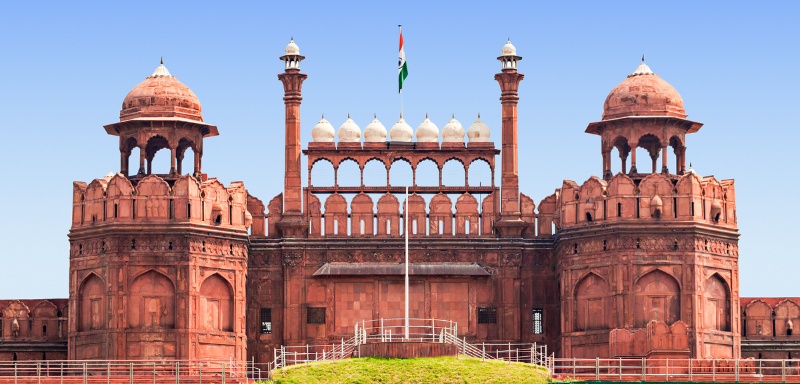
Standing proudly in the heart of Old Delhi, the Red Fort is one of India’s most iconic historical landmarks and a UNESCO World Heritage Site. Built by Mughal Emperor Shah Jahan in 1638 after he shifted his capital from Agra to Shahjahanabad (present-day Old Delhi), the fort served as the centre of Mughal power for nearly two centuries.
Step through the Lahori Gate and you’ll find an elegant world of marble pavilions, royal audience halls, ornate palaces, and bustling arcades. Wander through the Diwan-i-Khas, where emperors once received foreign dignitaries, admire the intricate details of the Rang Mahal, and explore the Mumtaz Mahal Museum. Visit in the late afternoon when the golden light softens the red sandstone, creating one of Delhi’s most photogenic backdrops.
Mysore Palace, Karnataka
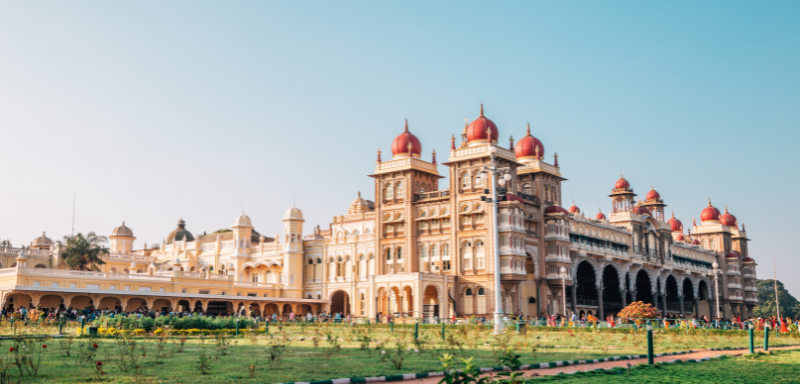
Every evening, Mysore Palace glows beneath thousands of lights, transforming one of India’s grandest royal residences into a scene straight from a fairy tale. Home to the Wadiyar dynasty, the palace is an extraordinary blend of Hindu, Islamic, Rajput, and Gothic architecture, with soaring domes, stained-glass ceilings, and lavishly decorated halls.
Inside, ornate Durbar Halls, royal portraits, and intricate carvings offer a glimpse into the opulence of Mysore’s former rulers. Visit during the spectacular Mysore Dasara Festival if you can, when the palace becomes the dazzling centrepiece of one of India’s most celebrated cultural events.
Amber Fort, Jaipur
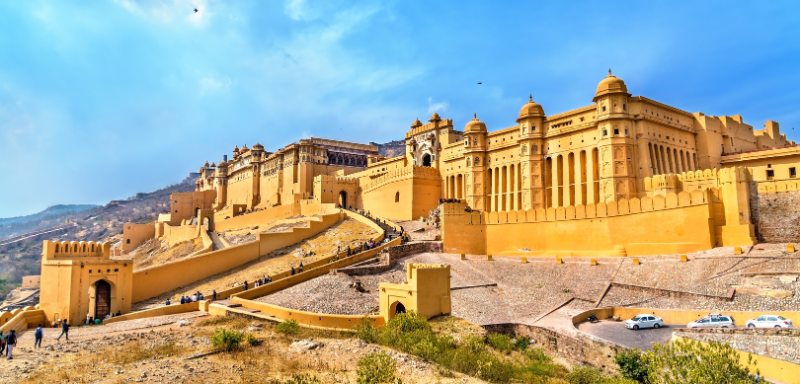
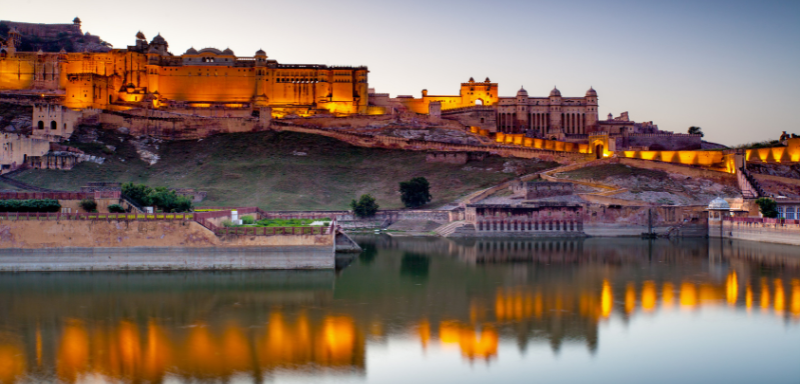
Perched high above Maota Lake, Amber Fort is one of Rajasthan’s most magnificent hill forts and a masterpiece of Rajput architecture. Built during the late 16th century by Raja Man Singh I, the fort later became the royal residence of the Kachwaha rulers before Jaipur was established.
Constructed from red sandstone and white marble, Amber Fort combines Rajput and Mughal architectural styles with beautifully decorated courtyards, gateways, temples, and royal apartments. Highlights include the glittering Sheesh Mahal (Mirror Palace), Diwan-i-Aam, Diwan-i-Khas, Ganesh Pol, and Sukh Niwas, where an ingenious cooling system once kept the royal chambers comfortable during Rajasthan’s hot summers.
Its commanding hilltop location and panoramic views make Amber Fort one of India’s most photographed heritage attractions.
Umaid Bhawan Palace, Jodhpur
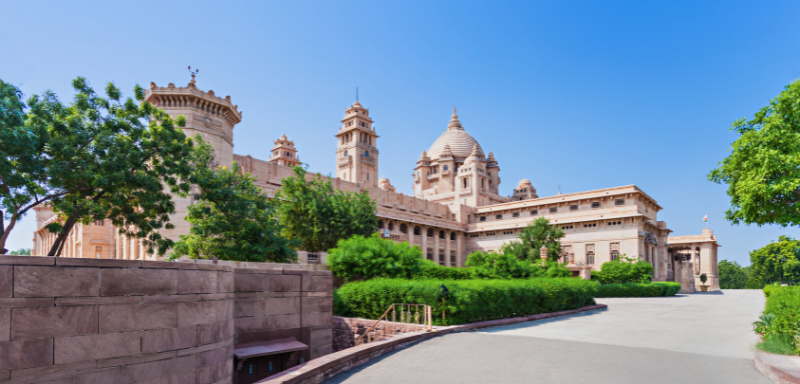
Few hotels in the world rival the grandeur of Umaid Bhawan Palace. Built during the 20th century to provide employment during a devastating drought, the golden sandstone palace remains one of the world’s largest private residences.
Today, part palace, part museum, and part luxury hotel managed by Taj, Umaid Bhawan offers guests the rare chance to experience life as royalty. Think sweeping staircases, vintage cars, manicured gardens, impeccable service, and elegant suites overlooking Jodhpur’s famous Blue City. Even if you don’t stay overnight, the palace museum is well worth a visit.
Taj Falaknuma Palace, Hyderabad
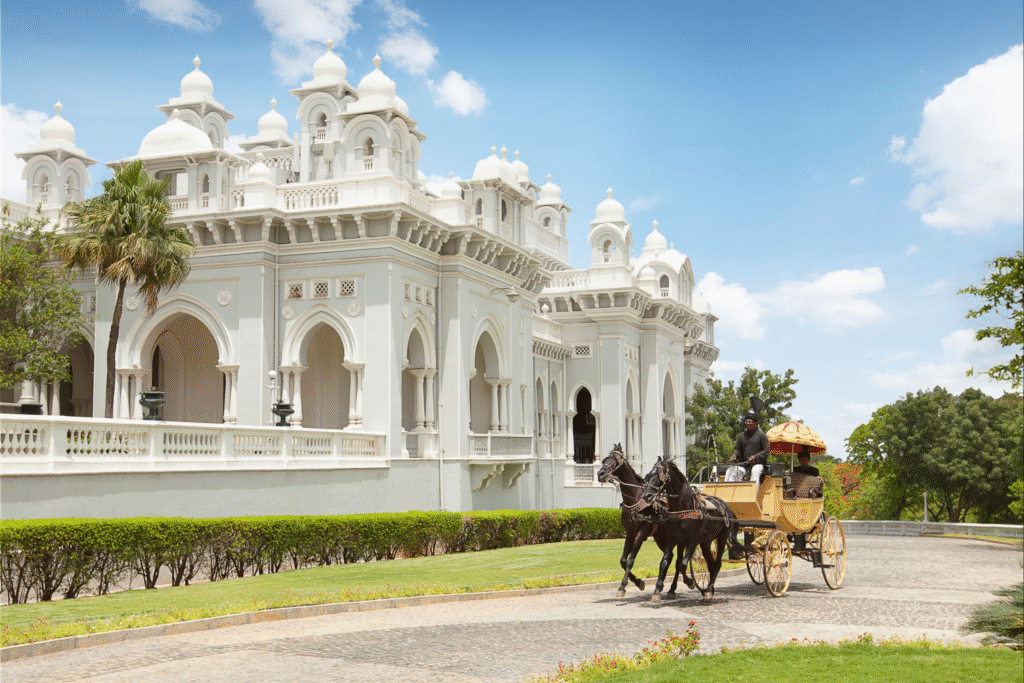
Perched nearly 2,000 feet above Hyderabad, Taj Falaknuma Palace is one of India’s most luxurious palace hotels. Built in 1894 for Nawab Sir Viqar-ul-Umra and later acquired by the Nizams of Hyderabad, the palace became a symbol of unimaginable wealth and royal extravagance.
Inspired by Italian and Tudor architecture, the palace features magnificent marble staircases, Venetian chandeliers, priceless antiques, crystal collections, intricate frescoes, and one of the world’s finest palace libraries.
Guests arrive by horse-drawn carriage before stepping into a world of royal hospitality, where every detail reflects the grandeur once enjoyed by the Nizams.
Laxmi Vilas Palace, Vadodara
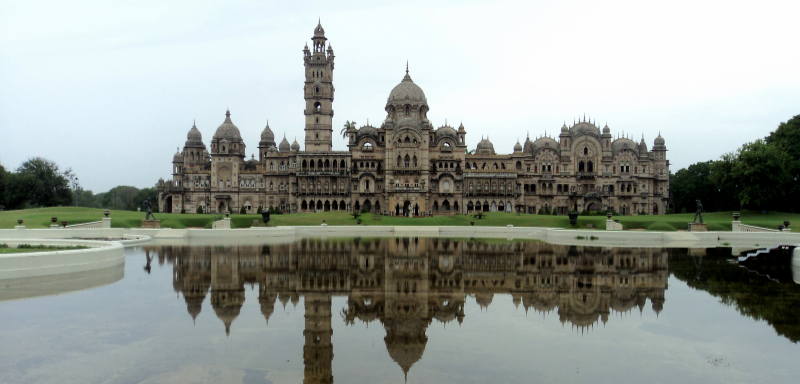
Sprawling across more than 700 acres, Laxmi Vilas Palace is often said to be nearly four times the size of Buckingham Palace. Still home to the Gaekwad royal family, this magnificent estate combines Indo-Saracenic architecture with beautifully landscaped gardens, impressive museums, and one of India’s finest private royal collections.
Inside, visitors can admire ornate interiors and the Maharaja Fateh Singh Museum, while the palace grounds provide countless opportunities for leisurely walks and photography. It’s one of Gujarat’s finest heritage attractions and one that still feels surprisingly under the radar.
Agra Fort, Agra
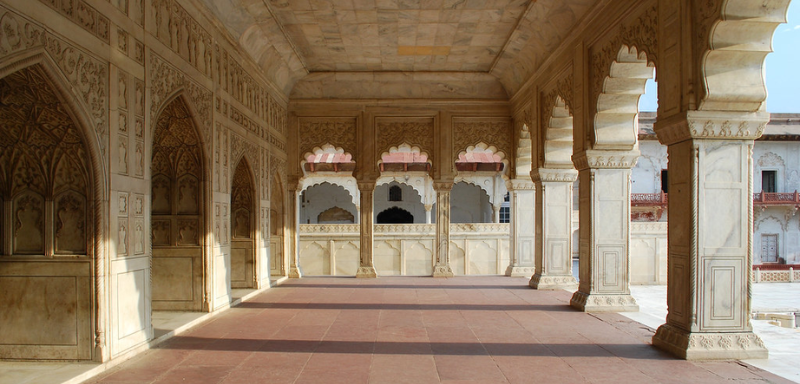
While the Taj Mahal steals the spotlight, Agra Fort quietly tells the story behind the empire that built it. This UNESCO World Heritage Site is an architectural masterpiece in its own right, combining formidable defensive walls with elegant marble palaces and peaceful courtyards.
Explore the grand Jahangiri Mahal, the mirrored interiors of the Sheesh Mahal, and the marble Musamman Burj, where Shah Jahan is believed to have spent his final years gazing across the Yamuna River at the Taj Mahal. Arrive early in the morning for softer light, smaller crowds, and one of Agra’s most Instagram-worthy views of the world’s most famous monument.
Final Thoughts
Whether you’re exploring the mighty Red Fort in Delhi, admiring the illuminated Mysore Palace, wandering through the grand courtyards of Amber Fort, or indulging in a royal stay at Umaid Bhawan Palace or Taj Falaknuma Palace, India’s forts and palaces offer unforgettable journeys into the country’s regal past. These magnificent landmarks continue to preserve the legacy of India’s kings, queens, maharajas, and nawabs, making them must-visit destinations for every history lover and traveller.